Loose Screws
The Royal Game of Ur
The oldest board game we still know how to play, rebuilt as a book that might get unearthed again in another 5,000 years.
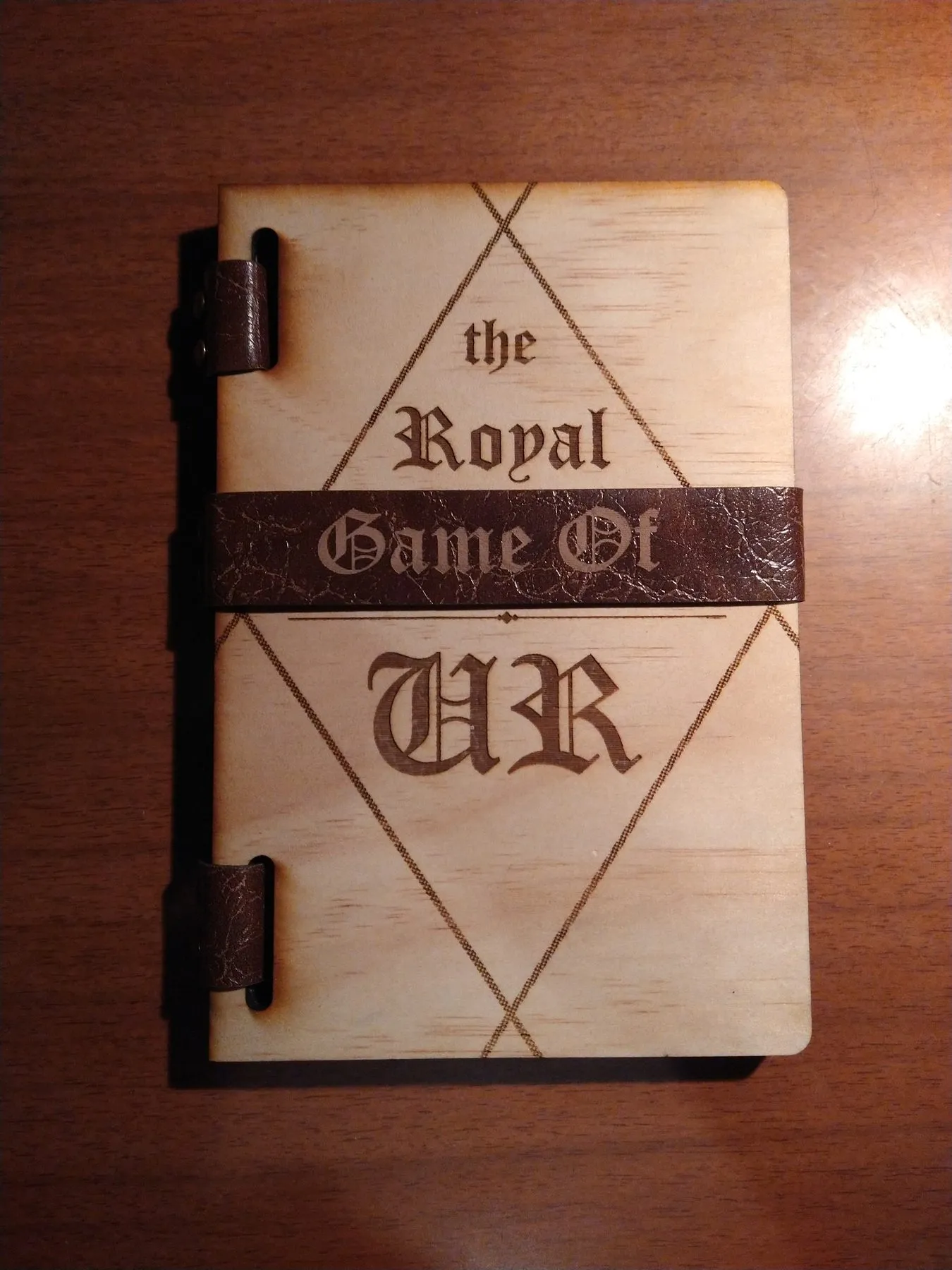
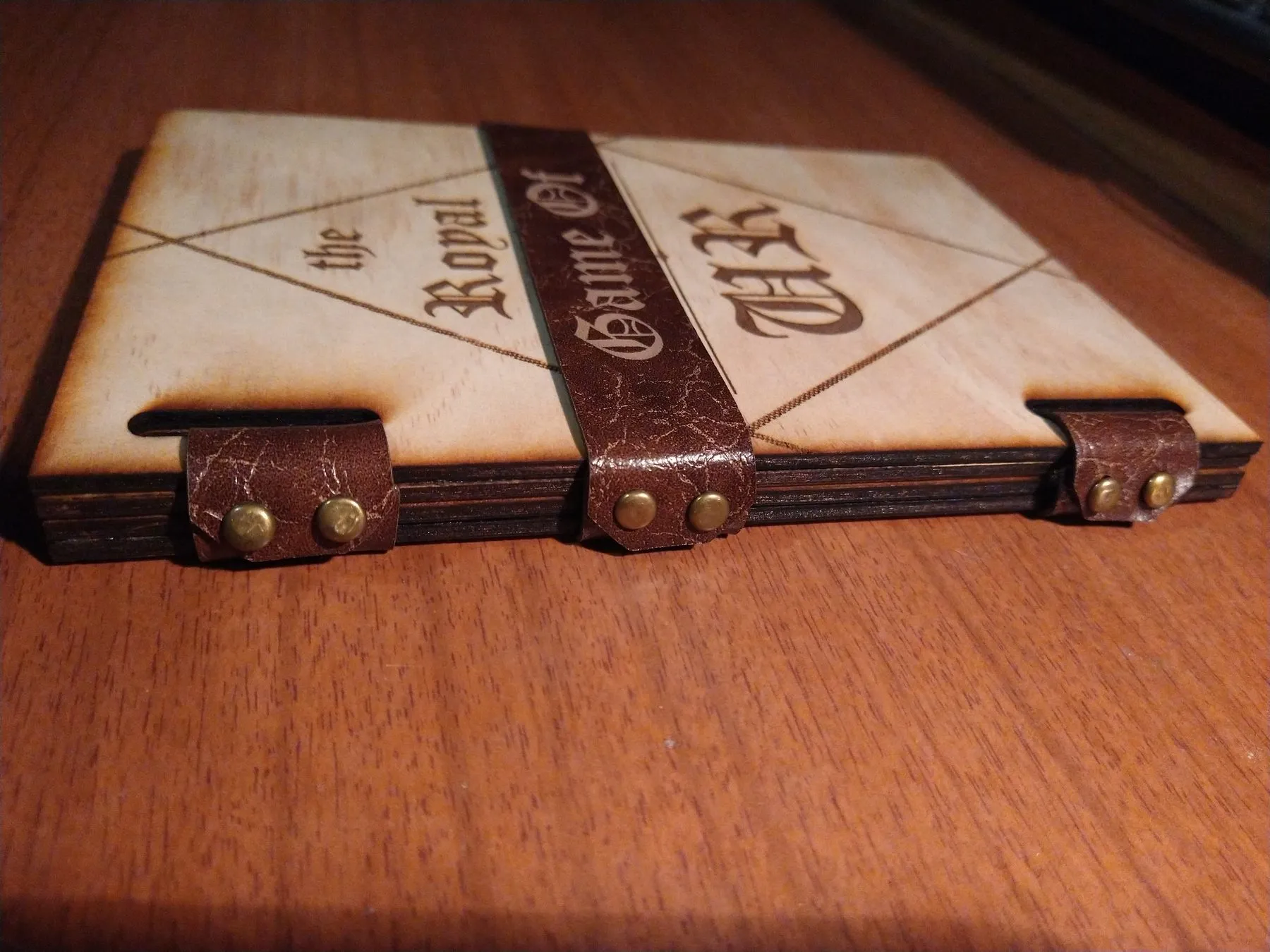
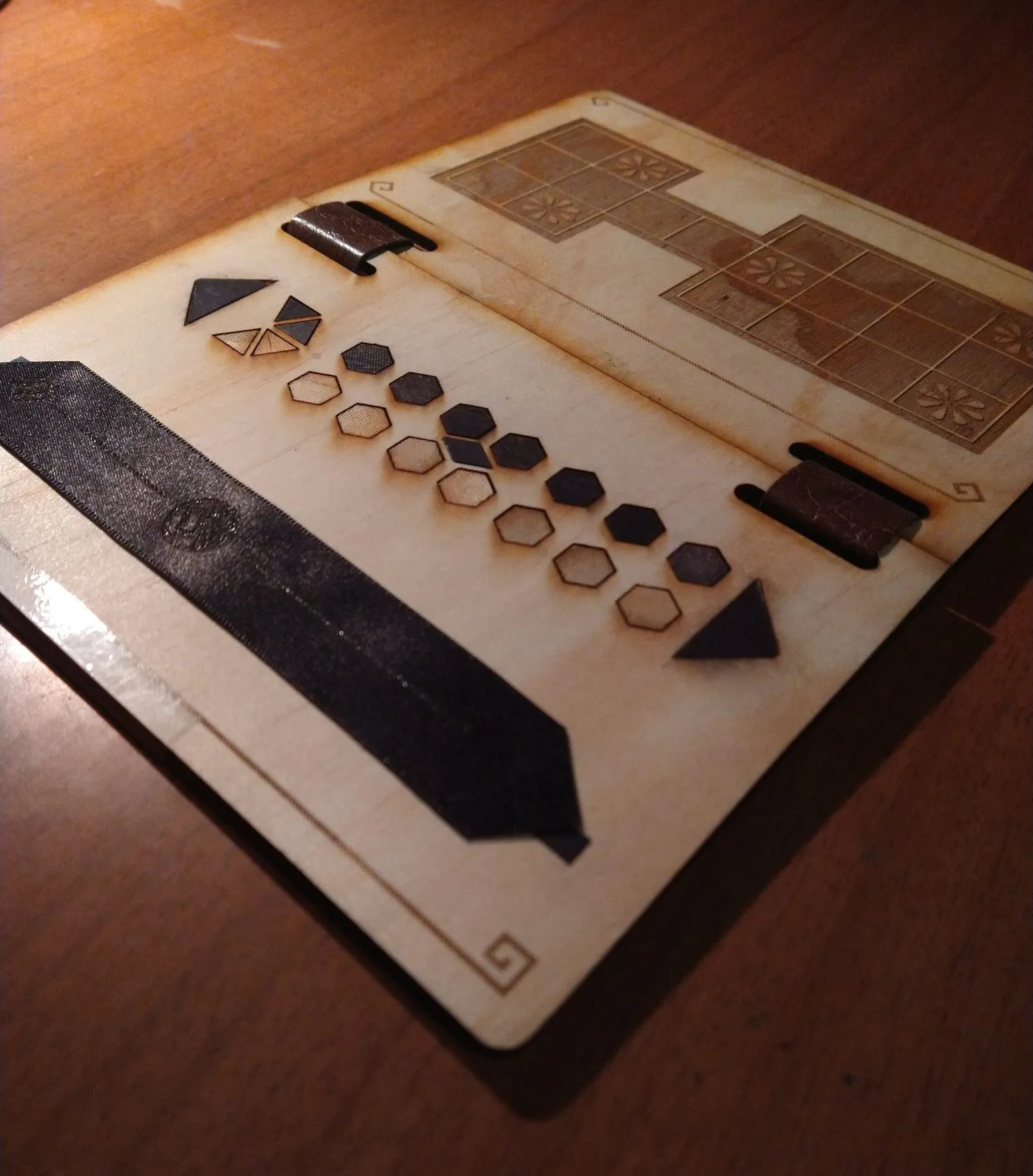
An ancient game, actually the most ancient game we still know how to play. The betting-and-drinking version was translated from a Babylonian tablet in the 1980s, and the actual rules were reverse-engineered from that. I loved the idea of making a version that, in just the right circumstances, might be unearthed in another 5,000 years. So I give you Geoff’s version of the Royal Game of Ur! (It’s not too hard to replicate the way I made it, so you can also get one from the shop.)
Basic rules
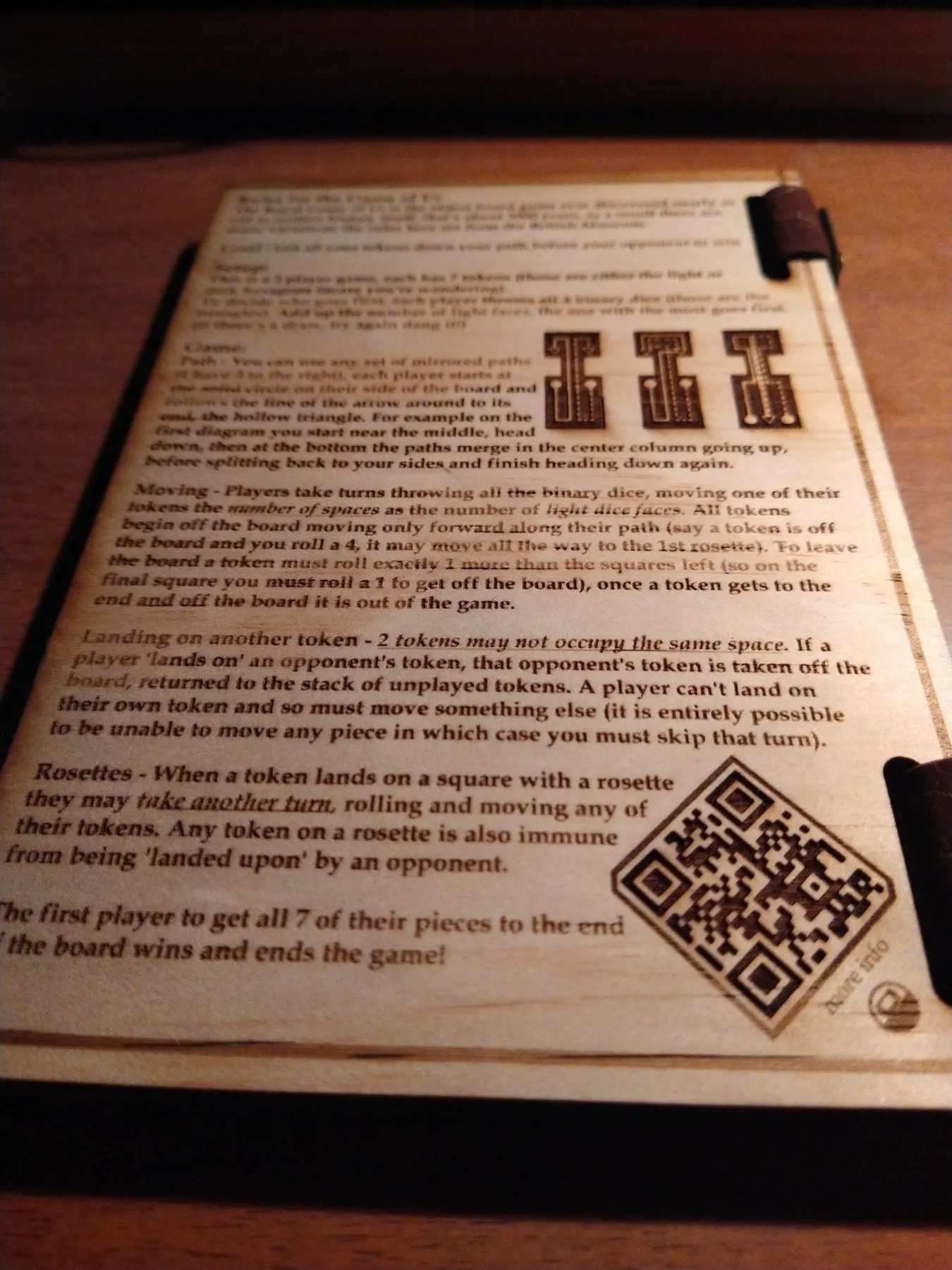
The Royal Game of Ur is the oldest board game ever discovered, nearly as old as written history itself: about 5,000 years. As a result there are many variations. The rules here are from the British Museum.
Goal: get all your tokens down your path before your opponent does.
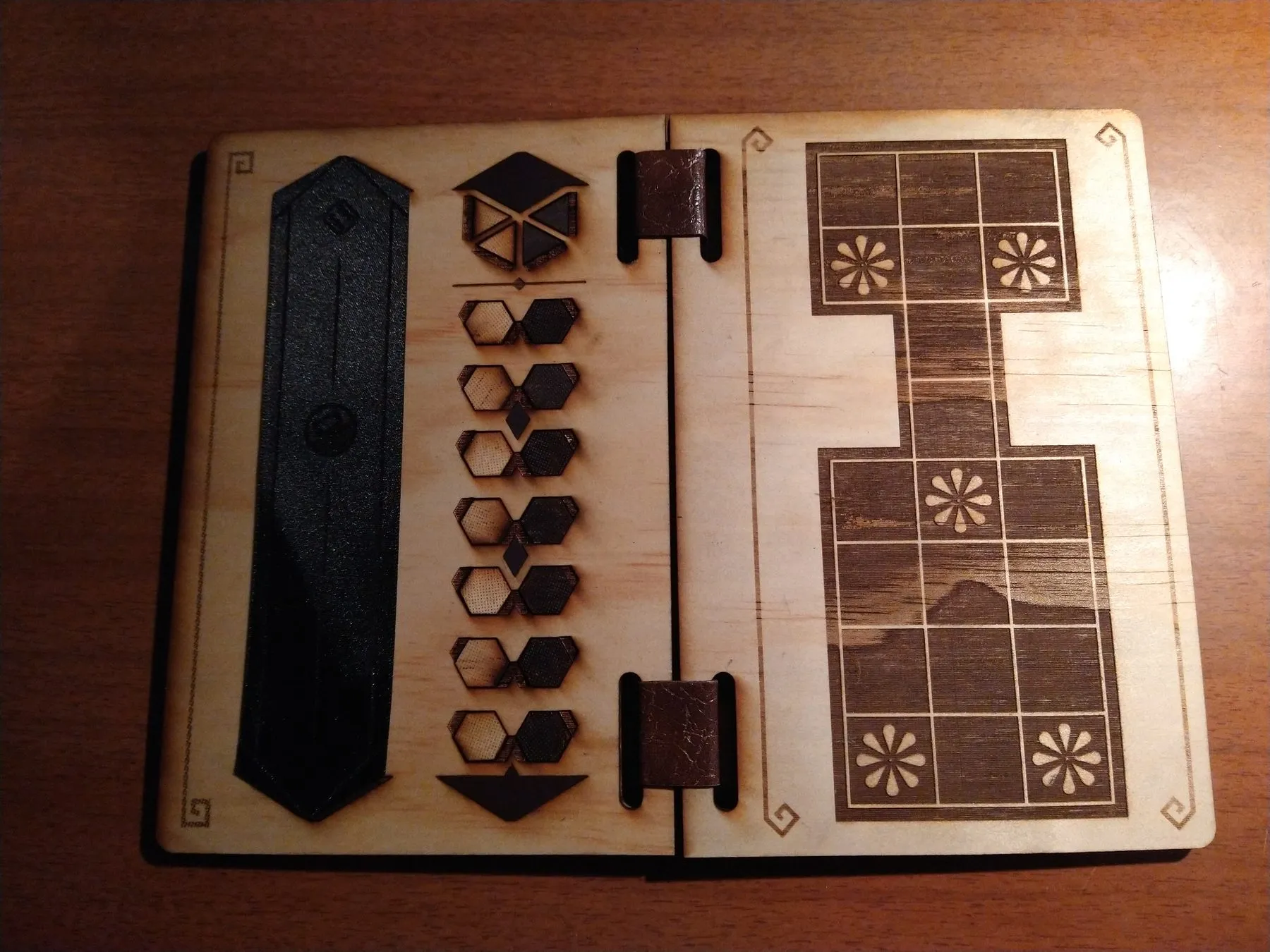
Setup: it’s a two-player game and each player has 7 tokens (the light or dark hexagons, in case you’re wondering). To decide who goes first, each player throws all 4 binary dice (the triangles) and adds up the light faces. Most goes first. If there’s a draw, try again, dang it!
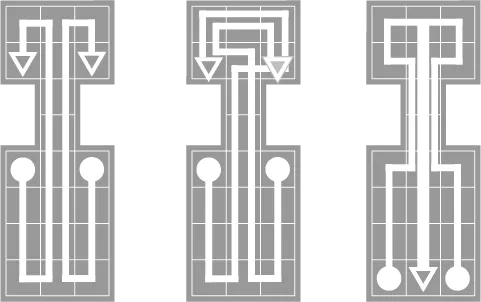
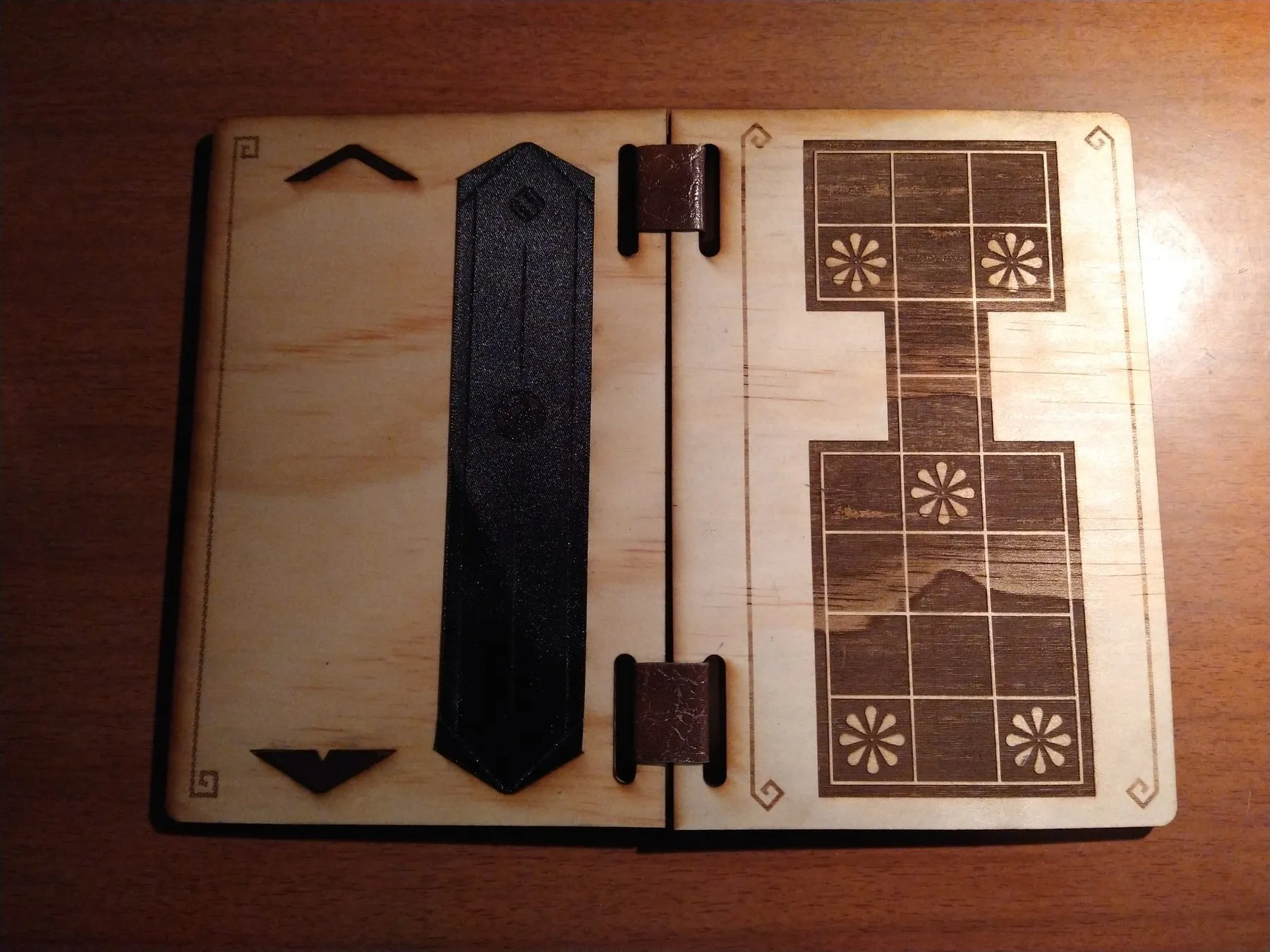
Path: you can use any set of paths (there are 3 here). Each player starts at the solid circle on their side of the board and follows the arrow around to its end, the hollow triangle. On the first diagram, for example, you start near the middle and head down. At the bottom the paths merge into the centre column going up, then split back to your own side and finish heading down again.
Moving: players take turns throwing all the binary dice and moving one of their tokens as many spaces as there are light faces. All tokens start off the board and only move forward along their path (say a token is off the board and you roll a 4: it can move all the way to the first rosette). To leave the board, a token must roll exactly one more than the squares left, so on the final square you need a 1. Once a token is off the end, it’s out of the game.
Landing on another token: two tokens can’t share a space. If you land on an opponent’s token, it goes back to their stack of unplayed tokens. You can’t land on your own token, so you’ll have to move something else. It’s entirely possible to be unable to move anything, in which case you skip that turn.
Rosettes: land on a rosette and you get another turn, rolling and moving any of your tokens. A token on a rosette is also safe from being landed on.
The first player to get all 7 pieces to the end wins!
A little history
We know the Game of Ur was played by the Sumerians, but the rules were found on a tablet sent by a Babylonian to a Greek friend. The tablet just happened to be about some extra drinking and betting rules he thought the Greeks should use.
For a run-through of the basic game, this video is great: Tom Scott vs Irving Finkel.
There are a few other interpretations, though I lean towards Irving Finkel’s more or less direct translation. That said, Masters of Games has put some of the others together.
And for the best part, the betting version, see Finkel’s short paper or the slightly more digestible article on BoardGameGeek.